Showing posts with label environmental physician. Show all posts

November 22, 2015

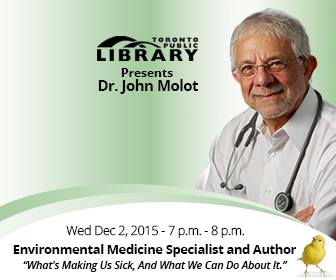
Dr. John Molot at Toronto Public Library

Dr. John Molot, Environmental Medicine Specialist and Author is going to be giving a talk at the Toronto Public Library on Wednesday, December 2, 2015 at 7pm.
If you have the chance, it is very worthwhile to hear him talk.

June 08, 2015

2nd Year ES/MCS Anniversary Update


It was May 1, 2013 that I became TILTED and experienced the health crisis that I am still recovering from. That first year was marked by body rebellion, full chaos and profound uncertainty as I met with several specialists and underwent test after test after test. I was flailing through day to day life in a dazed neurological fog. I negotiated a number of necessary transitions during that first year. My partner and I moved into a house that was safer than our previous apartment and we worked very hard to completely detox our lives. I had to leave my job because the building that made me sick became entirely intolerable to me. It was not an option to continue to work, so I started graduate school. It was a very confusing time and I was very isolated from family and friends. I was not only housebound, but also mostly bedridden and unable to function for many weeks and sometimes months at a time.  I wasn’t sure if I was dying, or what the hell was going on and no one else seemed to know either, including all of the specialists I’d seen. 
 Our current medical system is poorly equipped to deal with multi-system illness, nor is it equipped to deal with the broad spectrum of illnesses that are arising as a result of our increasingly toxic environment. New paradigms are emerging, but change is always slow and we all know that matters related to the environment are not a priority for our current government. And sadly, those of us at the front end of this public health crisis are not going to get what we need from our family doctors and until more research dollars are allocated to environmentally linked illness, we will continue to be delegitimized. The good news is that the province has provided $560,000 to support annual fellowships over three years, which we result in six new fellowships for family medicine graduates. This will allow graduating physicians to take an extra year for training in Environmental Health. This will translate to more health care for folks with environmentally-linked illnesses in Ontario and it shows that the Federal Government is aware of this health issue and is at least starting to take steps to address it. It gives me some hope.

         The second year of my illness has been marked by medical diagnosis, increased knowledge, healing, disability accommodation, and moving towards finding joy in my ‘new normal’. I had 10 solid months in my graduate program where I was working from home on my internship, an online course, and my thesis. This really allowed me the opportunity to have some control over my exposures and keep them to the bare minimum. I met with the Environmental Physician whom I’d waited 18 months to meet and thankfully, I wasn’t disappointed. I was deeply honoured to find that I was meeting with a Physician whose work I was familiar with through my research. He spent five hours with my partner and I and he really shed a lot of light and clarity for us. I made a lot of major lifestyle changes in the last year at the suggestion of my Environmental Physician.

Prior to becoming ill, I was already consuming a mostly (65-75%) organic diet that was comprised of what I thought was a healthy dose of vegetables. My Environmental Physician (EP) suggested that I should be eating 100% organic all the time and that I needed to consume between 9-12 servings of vegetables and fruits everyday. I have multiple nutritional deficits and malabsorption issues and so the idea was to just blast the body with what I have come to call “dense nutrition”. It is a lot of work to eat that many vegetables and fruits and so I have had to work really hard at it. I have spent and continue to spend several hours a week doing food preparation and meal planning in order to meet my “dense nutrition” goals. I finally gave up the only two non-organic foods that I had been clinging to for a long time - potato chips and take out burritos. This was not easy for me to do, because over the course of the last two years food has been very challenging. My partner and I used to really enjoy eating out and it is simply not an option for me anymore due to cleaning products used by restaurants, questionable food ingredients, lack of organic options, poor ventilation, and fragrances worn by other patrons and staff. We continued to eat ‘take away’ food on occasion, but I have given that up too. It just isn’t worth the damage it does to my guts. What I miss about eating out was more about the social aspects, than the actual food. The food we eat at home is superior in quality because we know exactly where it comes from and it is impossible to eat out when you have food restrictions.

           I was living with IBS for many years prior to becoming TILTED, but when I got sick it spiralled out of control. I was just a ball of inflammation and almost everything I ate made me sick. I have been struggling with chronic, widespread inflammation as part of my illness. I developed a number of food sensitivities and went through a major elimination protocol and had to give up a wide variety of foods for a really long time. This year, I learned a lot about how my IBS is connected to my ES/MCS from my EP. He introduced me to FODMAPs nutrition protocol and this has literally transformed my gut health over the last 9 months. In fact, I have been able to start eating a wider range of foods and returned many previously not-tolerated foods back into my diet, which has been glorious. It has been a long long road to gut health, but I have truly accomplished a great thing and am very pleased with that aspect of my healing. Even though at times it has felt very restricting to go through this healing process with my guts, in the end it has been worth it. The reduced inflammation in my guts has decreased my reaction times and ES/MCS symptoms and has increased my overall enjoyment and relationship with my food. YES!

Cardiovascular exercise has become a huge part of my recovery over the last nine months and was also recommended by my EP. I can still remember how angry I was with him when he suggested that I exercise, especially in light of the fact that I had been bedridden for months at a time. But I was and am very committed to my recovery and his reasoning made sense. Many doctors prescribe oxygen therapy for folks with ES/MCS. My EP was open to prescribing oxygen to me, but he wanted me to try cardiovascular exercise first because it does have the same impact, which is forcing more oxygen into the bloodstream and cells. I started off slowly and worked my way up to 20 minutes/day of cardio, five days a week. Over the last 9 months, I have added a lot of core and strength training to my workouts. This has strengthened my heart, given me more energy, improved mitochondrial function and just made me physically stronger overall after spending the better part that first year in bed. I am simply not as active as I used to be because I don’t go places. I have to make a daily effort to move my body, work my heart and practice healing visualizations.

It took many months, but I have finally triggered my sweat response and I sweat on a regular basis now. This is a major breakthrough in my recovery because sweating is one of the important ways that the body removes toxins from the body. I didn’t realize how problematic it was that I did not sweat, because throughout my life I thought I was just lucky! Most folks with ES/MCS have poor detoxification systems and have to work hard to assist the body in that process. Many folks use sauna treatments for detoxification, but this was not an option for me because they are often made of cedar and are in places where there are pools that use chlorine, both of which I am unable to tolerate.

Meditation practice has been an important part of my recovery over the last year, although, in truth, I was only practicing 20 minutes a day regularly for a total of three months. I found that I really struggled with this practice because it was hard on my knees to sit for extended periods of time and I was also experiencing barriers related to practicing alone. I felt really isolated in this practice, didn’t have anyone to talk to about challenges that I was facing and it was also triggering other issues for me. After three months of solid practice, I gave it up and started cross stitching, which essentially gave me the same benefits of calming my upregulated nervous system.

I started a new treatment protocol under the care of my EP, including a wide array of amino acids to address my mitochondrial dysfunction, as well as a number of vitamins and other supplements which have been having a positive impact on my health as well. My partner and I purchased a good quality all metal design air purifier for our home, which has been so life-altering.

Obtaining a formal diagnosis has lead to increased disability accommodation at my school, which has made attending classes much more tolerable. At my request and support of my doctor, the Accessible Learning Center purchased two air purifiers for my classrooms and this has made a huge difference for me in the classroom. They also purchased non-toxic dry erase markers for my classrooms, which has has been massively helpful as well. I also have printing accommodations and am able to receive library books in alternative format. Accommodations continue to be a work in progress and it is certainly not perfect, but the Accessible Learning Center and the Diversity and Equity Office have made my graduate school experience possible. We have come a long way together since first term, when I had a major health collapse after attending classes for six weeks.

In all, my health has improved tremendously in the last year, however, I have really had to re-define ‘health’. Despite the fact that I feel I am 70-80% improved over last year, I am still mostly housebound. I am bedridden and unable to move at least 4-9 days out of the month with extreme musculoskeletal pain, neurological fogginess, and crushing migraines. I am still unable to travel, access public spaces and walk safely in my neighbourhood. This year I have come to discover that this may just as good as it gets and am learning to accept that maybe this is my new normal. I have had moments of frustration because I have worked so hard to get well and have followed every single recommendation, protocol and prescription of my EP. I have been fully dedicated to my health and wellness and have literally done everything within my power to recover. It is my full time job. I literally spend HOURS and HOURS of my week engaged in all of this healing activity and sometimes I just feel discouraged, like I should be healed by now! I keep expecting that ES/MCS is just going to go away and become a distant memory of a bad time in my past, but that is just not happening.

Which brings me to the present day.

As I look toward this coming year, I really want to start focusing on finding empowerment with what is, instead of continually hoping this is going to go away. I need to accept that this is my new normal and that while I can experience varying degrees of health, my life is just not going to be what it was. Two years later, I am still mourning the loss of my life and my lifestyle and I just don’t want to live with the burden of those losses for the rest of my life. There are so many people out there with this illness who are wayyyy sicker that I am, take for example Amelia Hill in Australia. Her story is just heartbreaking and yet, she manages to be so positive and inspiring. 
In September, I will be completing an internship with the Diversity and Equity Office and will be developing educational resources on ES/MCS for the University as part of that placement. I will continue to collect and analyze data for my thesis and continue to build my professional identity as a social worker living with ES/MCS. I hope to have more opportunities to engage my school community around access barriers related to indoor air quality and synthetic chemicals. I hope to find my voice and confidence in my experience instead of wishing it away all the time. All along, I have just wanted it to go away and to not be something that I had to think about, or talk about in my life. I have been embarrassed by it. Most of the healing activities that I take part it are motivated by my wish to make it go away because I do not want to have this illness. I do not want to talk about it. I do not want to explain it. I do not want to have to educate anyone about my experience. I don’t want my experience. But if there is anything that I have learned this year, it is that I can’t blast it away with nutrition or exercise or meditation or supplements, or yoga etc... These are all activities that will promote and support my health, but will not take away my chemical injury. I would like to come to a place where not everything is about making it go away, but rather learning to live well with it and to live a fully authentic life as I am, not how I wish I could be and not how I was.
Letting go.

~*~*~*~*~*

Links: 


March 03, 2015

Exercise, Sweating, and Nutrition


Over the last five months, I have developed a regular habit of exercise on the recommendation of my Environmental Physician. I participate in a minimum of 20 minutes of a sustained 108 heart beats per minute - six days a week, no matter how badly I feel.  The only exception is when I have migraines because I literally can’t do anything during those stretches of time, which can last 24-72 hours and render me completely incapacitated. When my doctor suggested exercise, I have to admit I was really annoyed with him. I just spent all this time describing my symptoms of fatigue, lack of balance, nausea, dizziness, and musculoskeletal pain and there he was telling me to jump around and get my heart rate up? The audacity!

The truth is that I would do just about anything that he told me to do because he is a very well respected physician, so I made a strong intention to follow his suggestions and treatments with diligence. Much to my surprise, he was right. Exercise really helps me to manage my fatigue and increases my energy. It also creates new pains in my body that make it harder for me to tell the difference between pain caused by my illness and pains caused by working out. Somehow I am experiencing this as positive?!

My body doesn’t sweat. I never realized that this was an issue until I met with my Environmental Physician five months ago. I always thought I was just lucky! I was always that person in the crowd who didn’t sweat at the gym, at the beach, or while dancing at the club in my youth. My clothes never got smelly and I didn’t need to wear deodorant. Ends up that I am not so lucky after all. Sweating is one ways that the body detoxifies itself. My detoxifying system is already challenged and so not being able to sweat just creates a whole other issue for my health! The good news is that last week, after five months of hard cardio workout - I FINALLY SWEATED! This is a massive success for me in my recovery.
 
In addition to exercise, I have also started visualizing and talking to my cells. To be clear, my doctor did NOT suggest this to me, but it came about as a result of our time together. He had drawn a picture of a cell, to assist him in describing the dysfunction of my mitochondria to me. This image imprinted on my mind’s eye and I refer to the image especially during cardiovascular exercise to try to stimulate my mitochondria and support the cells in doing their metabolic work!


Another key aspect of my current recovery has been getting my IBS under control. I was diagnosed with IBS several years ago, but I really hadn’t figured out how to manage it. My Envrionmental Physician suggested the FODMAP nutrition protocol and it has literally changed my life. He also educated me about how my ES/MCS is related to the inflammation in my guts. FODMAPs has transformed my guts in a profound way. The main culprits for me were onions and garlic. Every meal I have ever made or enjoyed eating started with onions and garlic! Removing these two foods from my nutrition regimen has paid off in big massive ways. IT IS ALL ABOUT THE GUTS! I have worked hard to reduce inflammation through nutrition and supplements and I have increased my green vegetable intake to between 8-11 servings per day. I have also increased my good fats, amino-acids, magnesium, and fermented foods. My nutrition is spot-on these days and the last five months of committed focus has really paid off. I really have my doctor to thank for that.

November 26, 2014

"Nothing is Wrong with You. It is all in Your Head"


Just over 7 weeks ago, I finally met with a specialist in environmental medicine who diagnosed me with Environmental Sensitivities/Multiple Chemical Sensitivities (ES/MCS). This has had a positive impact on my experience and understanding of my illness, especially after being told repeatedly by my family doctor that my symptoms were in my head, that I was mentally ill and that nothing was wrong with me. My relationship with my family doctor over the last 19 months has been quite antagonistic and I am just beginning to work through the pain, frustration, and extreme invalidation that I have experienced within the context of our doctor/patient relationship. As a starting point for that healing process, I want to write out my experiences and share my story here.
 Prior to my chemical injury in May 2013, I never really had any major health issues.  I had been managing malabsorption issues (iron, B12), irritable bowel syndrome, and fibrocystic breast disease for a number of years, but nothing so serious that my life was significantly disrupted. The main symptom of concern that I presented during my first visit to my family doctor was an extreme heightened sense of smell.  I smelt everything, all the time and it was somewhat distressing. It was as if a switch had been turned on.  I could literally smell air fresheners inside of people’s homes from across the street if they had a window open. I could no longer walk to work because my senses were just overloaded. The downstairs neighbor’s laundry detergent and scented cat litter (which I never noticed previously in the two years we’d lived there) was suddenly seeping into our apartment. My family doctor’s initial response was, “oh, I know exactly what you mean.  When I go to the mall, I can’t even walk past Bed, Bath and Beyond."
Wait? What? Did she really just say that to me?
 I could hardly believe that she was trying to relate to me in this way. In the 12 years that she’d been my doctor, she’d never really been particularly friendly or engaging and on this particular day she decided to downplay my experience by normalizing it with her own and sharing a personal analogy. Once she stopped talking about herself and her own challenges with perfume and reviewed my file (family history of brain aneurism) she decided that we should rule out brain tumor, because apparently brain tumors and brain clots can cause heightened sense of smell, so she sent me for an MRI. This was an appropriate first step, but I was on the waiting list for an MRI for 7 months.
Shortly after my first appointment, I visited my doctor again presenting with a broad range of physical and neurological symptoms that seemed to be related to the heightened sense of smell, such as dizziness, headaches, fogginess, musculoskeletal pain, neurological stupor and nausea. By this time I had done a quite a bit of research online regarding my symptoms and came across the Environmental Health Clinic (EHC). I printed off the information about the referral process and presented it to my family doctor. She had not heard of the EHC, but said she would review what I provided and get back to me. Rather than considering the possibility of an environmental illness, she determined that I had allergies. This theory made no sense to me whatsoever since I had no rashes, no wheezing, no itchy eyes, no runny nose – the sort of symptoms that might be treated with anti-histamine. But she was convinced it was allergies, so she referred me an Allergist. The Allergist confirmed what I already knew – my symptoms were NOT an allergy response. In fact, the Allergist had his own ideas about my symptoms. He believed that I was suffering from migraines and he referred me to see a Neurologist.
I got really sick at the Allergist’s office because of air fresheners in the bathroom at his office and was out of commission for days following that appointment with my usual symptoms, plus a migraine. I had only ever had one migraine in my life, but following my chemical injury, migraines had certainly had become commonplace. The migraine theory gave me hope and I started paying closer attention to my migraines and determined that they coincided with really specific exposures, namely solvents and petrochemical products, but there were always other symptoms present that were not consistent with the migraine diagnosis.
 After my family doctor received confirmation that I was not suffering from allergies, she agreed to put in my referral the Environmental Health Clinic and I was very happy despite being told I would be on the waitlist for up to 18 months. That is a really long time to be waiting to see a specialist, so I put my energy and hope into seeing the Neurologist which was a much shorter wait. Many of my symptoms were neurologically based, such as, headaches, dizziness, migraines, stupor, lack of balance, loss of consciousness, etc. The neurologist reviewed my MRI and conducted a number of neurological tests and they all came back normal. He gave me some treatment options for managing migraines and sat across the desk from me, shaking his head almost remorsefully and said, “in reality, we really know very little about the brain”.
Meanwhile, my health was deteriorating severely and six months after the onset of my symptoms, I literally collapsed and was completely disabled by my symptoms. Attending school facilitated this collapse due to poor air quality, poor ventilation, chemical cleaning products and the personal care products worn by students, staff and faculty. In addition to the neurological and digestive symptoms, I was also experiencing musculoskeletal symptoms that left me unable to move or get out of bed for days at a time. Test after test came back normal and my family doctor turned to the “it is all in your head” theory. She advised me that there was absolutely nothing was wrong with me and that I was depressed and anxious. She prescribed me antidepressants (which I never took) and counselling and shared a personal story about how she was depressed last year and how SSRI medication really helped her. She went on and on about how she practices evidence based medicine and that as her patient I should trust her. She assured me that SSRIs were safe and widely used to manage symptoms like mine and normalized the experience of mental illness noting that most people become mentally ill at some point in their lives.
It was devastating. She invalidated me and my experiences and left me feeling so powerless. I’d been extremely ill for months and my life was literally shrinking as I spent most of my days and nights in bed, was unable to attend class and had become isolated from community. I am not entirely surprised that she thought I was depressed and anxious, but I knew that SSRI’s were not going to resolve my symptoms. I have a degree in Psychology and I worked in the field of mental health for 5 years. I am familiar with depression and anxiety.
Unfortunately, I found myself in quite the bind because in the midst of all of this I was also in graduate school and I required accommodations. The Ontario Human Rights Commission points out the challenges that people with MCS face in getting a diagnosis and that accommodations should be provided with or without a diagnosis. Posters and emails circulated the university about creating a scent-free space, but this was simply not enough.  Posters and emails do not make a space safe for people with MCS - far from it.  In order to qualify for services with the Accessible Learning Center, I had to have medical documentation stating that I have a diagnosis of a recognized disability. When I discussed this with my family doctor, she stated that the only letter she would provide was that I have a mental health diagnosis. At this point, I was in the thick of mid-terms and unable to get out of bed, let alone go to class, so I was feeling pretty desperate. I can still recall her patronizing voice, sitting across from me in that medical office, saying, “do you agree to this letter or not?”
 I feel like I was backed into a corner and left without any options.  I was going to lose my term if I didn’t get some support. I couldn’t tolerate the ink in my textbooks, which meant I couldn’t do my readings. I couldn’t be in my classrooms due to the “chemical soup” in the air. I was uneasy on my feet, nauseous, foggy, unable to communicate, and vomiting and crying in the bathrooms on the regular.  It was taking me five or six full days and nights to recover from being in the school one full day. I was spending 20-25 hours a week soaking in epsom salt and baking soda baths because it was the only thing that stopped the pain. I was so sick and I simply couldn’t keep going to class. I organized a meeting with all of my professors and explained what was going on and requested that I Skype into the remaining classes for the term. The responses were very mixed. One of the professors insisted that I needed medical documentation, while the other four were very supportive and willing to assist me in any way they could. Ultimately, I Skyped into my remaining lectures and conducted my presentations remotely. I wrote all of my papers from bed.

By the end of the first term, I was quite ready to drop out of the program because I was just so discouraged. I was spending the majority of my time sending emails and trying to communicate my access needs, but it seemed that no one was really listening to me. I barely even understood what was happening to me - only that I was constantly assaulted by fragrance, chemicals, cleaning products, dry erase markers, smoke from burning sage and poor air quality at school. My immune system was in chaos and school was not a safe place for me to be. Sometimes I could barely believe I was actually in a Social Work school. The message was clear, I needed medical documentation.  By that time, I had been on the waiting list for the Environmental Health Clinic for approximately five or six months and was told that it would likely be another year before I could get in. I needed support, so I took my doctor’s letter and by taking her letter, I was agreeing to the depression diagnosis. She held so much power over me with that letter. I needed support and the only way to get it was to acquiesce to her power. I had to admit that I was wrong and that she was right. Admit that I knew nothing about my own body and my own experience and she knew everything. It was devastating for me, but I did it. I accepted her letter and in doing so accepted her diagnosis. Self-preservation kicked in. I did what I had to do.
I took all of the documentation to the Accessible Learning Centre and finally someone was listening to me and took my concerns seriously. I was clear with the Accessible Learning Centre that I was NOT depressed and explained to them what was happening to me. The office had also never heard of my illness, but they were willing to accommodate me and so I we moved forward with the planning and ultimately came up with a plan that worked fairly well and had enough flexibility in it that I could find success in my coursework, even if the school itself remained unsafe.
Believe me, there have been many times in the last 19 months that I thought maybe I was mentally ill because that is how I have been treated by so many doctors, specialists, administrators, professors and even my friends and family. If people tell you something enough, you begin to believe it.  What was happening to me seemed unbelievable even to MYSELF and were it not happening to ME, I might not have believed it either!
I finally saw a specialist from the Environmental Health Clinic who diagnosed me with Environmental Sensitivities/Multiple Chemical Sensitivities (ES/MCS) at the end of September 2014. The doctor spent five hours with my partner and I and was extremely thorough and described the complexity of my multi-system illness in a way that was both accessible and validating. It was the first time since I’d been sick that a doctor treated me with any amount of compassion and understanding.
Mainstream medicine is reductionist. Everything has to lead back to a single body system, with a test to confirm it and a medical intervention (pharmaceuticals) to treat it. Environmental illnesses simply do not fit this model of medicine because many systems are involved.  New paradigms are required and environmental medicine is necessary to be able to meet the health needs of people living in our increasingly toxic world.
Having an ES/MCS diagnosis has been validating for me and has helped me make sense of my experiences. I waited a long time to see a specialist. My next step is to have the mental health diagnosis removed from my medical file. It was never true in the first place and truly only represents the ignorance of my family doctor. I only wish she’d had enough sense to just say, “I don’t know what is happening to you” because saying “nothing is wrong with you, it is all in your head” wasn't really helpful and actually did more harm than good.